


A future where our finances are secure and sustainable is inseparable from the missional health of our parishes.
In 2025, DBF staff and trustees faced this truth honestly and took decisive steps to change how we fund, plan and talk about our common life, recognising that financial sustainability is essential to long-term mission.
 Parish Share
At the heart of the diocesan economy is Parish Share: the faithful and generous giving of people in our parishes that funds ministry, training and support across the diocese. For many years, Parish Share has not fully met the true cost of this work, creating a structural deficit managed through the sale of surplus clergy housing. This is no longer a sustainable solution. 2025 marked the first year of the new Parish Share scheme. Significant effort went into supporting its introduction through tailored resources, webinars and visits to most deanery synods. Clergy and parish officers were supported to understand both the changes and their wider implications. Parish Share income was broadly maintained at 2024 levels. While this was pleasing given we are in a period of transition, it is important to note the 2025 total contribution represents a drop in real terms when taking inflation into account. We also prioritised transparency and understanding. Three virtual finance briefings strengthened confidence and enabled more informed local conversations about diocesan finances. Alongside this, four in-person Money Matters events helped parishes think differently about money, focussing on ‘planning to thrive, not just survive’.
External funding
We are making good progress in diversifying income. External funding increased by almost 50% from 2024 to 2025 and is set to more than double in 2026, reducing dependency on Parish Share while enabling strategic investment. Trustees have also approved a clear five-year financial plan and asset management strategy, ensuring our assets work harder - funding transition, reducing the deficit and safeguarding resources for future generations. The challenge remains significant, but there is hope. We are taking the steps needed now to secure a sustainable future for our shared mission.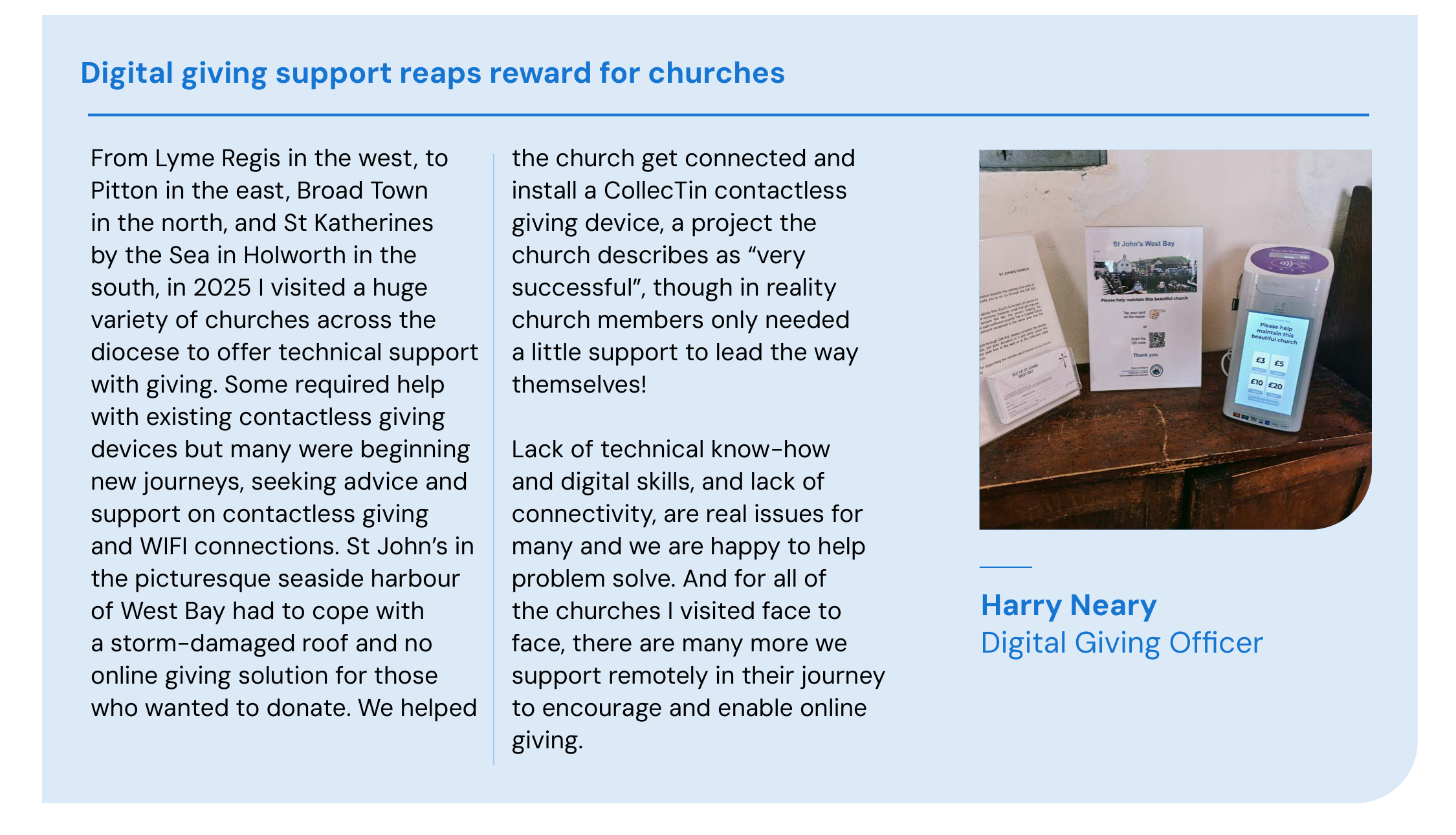

Digital giving
In 2025, the number of parishes with digital giving enabled passed the halfway mark, with 55% now able to take either contactless or online/QR code donations. Collectively the parishes raised £779,828 this way, passing the 2024 total of £527,406 by the end of September. Whether this is ‘new’ money or simply replaces the cash donations that we used to receive in the plate or the wall safe, is hard to know. But the fact is, with fewer people carrying cash, and cheques almost completely phased out, we believe it is essential for all churches to offer digital giving, or donation income will continue to be impacted, particularly at life and festival events, and from heritage visitors.
Parish Giving Scheme Raising funds for mission and ministry continues to be our priority, and we encourage all parishes to join the Parish Giving Scheme (PGS), so that donations can be linked to inflation and maintain their value. Last year, 25 new parishes registered for PGS, bringing the total number of participating churches to 267, collectively raising £3,211,614 including Gift Aid. Crucially, this is unrestricted income that directly supports the local church mission. PCCs are encouraged to set a target of raising the cost of ministry through planned giving and Gift Aid alone – St Michael’s Colehill and St Nicholas Winsley are just two examples where this goal has been reached.